Dyscalculia is a form of dyslexia. Learn more about the symptoms of this disorder, its types, and treatments. Find out what it means and how to spot it.
What is it?
The term dyscalculia originates from ‘Dys’, which means ‘difficulty/poor’ in Greek and ‘Calculia’ which means ‘calculations’. Put together, the word means difficulty with calculations. Thus, dyscalculia is a learning disability involving mathematics.
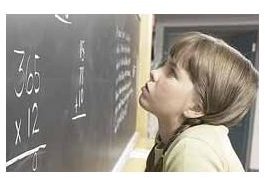
Children with this disorder are likely to have difficulty comprehending and using mathematics and find it extremely difficult to acquire arithmetical skills. This disorder is also known as mathematics dyslexia. Sufferers find it extremely difficult to calculate variables, recognize numbers, and count objects.
These children have normal IQ levels and everything else is normal including their reading, writing, and speaking skills. Scientists have yet to find a definitive cause for this disorder, although there is some speculation that certain genetic anomalies, such as Fragile X Syndrome, or environmental causes such as in-utero exposure to alcohol, could play a role in developing dyscalculia.1
Types of Dyscalculia
Dyscalculia can be of many different types as explained below:
Sequential: The disorder makes it difficult for the disabled to count numbers in a sequence. Additionally, he or she also may have a problem with time calculation, schedule check, direction tracking, and measurement taking.
**
Developmental: Children facing this find it difficult to count and recognize mathematical signs.
Operational: This problem is associated with remembering or memorizing mathematics rules.
Verbal: This disorder makes it difficult for the child to carry out normal mathematical calculations, as the child does not understand signs and symbols.
Acalculia: This stage usually occurs during the later stages of life. This type of dyscalculia is generally acquired through a brain injury or stroke. The disorder makes it difficult for sufferers to carry out simple mathematic functions like addition, subtraction, multiplication, and division.
Typical Symptoms
The symptoms of dyscalculia include difficulty in:
Classifying mathematical signs (addition, minus, multiplication, and division).
AdvertisementReading a clock and telling time.
Calculating basic amounts like bills.
AdvertisementLearning multiplication tables.
Using calculators.
AdvertisementReading a personal schedule.
Learning and remembering mathematical rules and formulas.
AdvertisementKeeping records.
Playing games that involve numbers.
Advertisement
Identifying Students
If you are a teacher and you suspect a student may have this condition, or you are a parent who suspects your child has dyscalculia, contact the school’s Special Education chairperson or school pyschologist and request a meeting. The school should be able to evaluate the student through various means. If the results are positive and your child has dyscalculia, a special IEP plan could be drafted and implemented by the school.
In regards to mathematics, these children need one-on-one support in the classroom. Teachers can adopt specific classroom strategies that will help these children learn to the best of their abilities and avoid the anxiety and frustrations that could eventually lead to avoidance of studying or attempting to do math.
Early detection of these symptoms can allow for immediate action and diagnosis. Early treatment and diagnosis can help the child overcome this disability.
References
- About Dyscalculia, Dr. Anna J. Wilson, AboutDyscalculia.Org