Studies show that children who know a second language do better academically. The earlier young children are exposed to another language, the better. Learn techniques to incorporate Spanish vocabulary into the preschool classroom!
Widely believed theories about teaching a child a second language tell us two things:
the earlier you begin, the easier it is for the child
Advertisementstudents tend to do better academically when they know a second language
So why not start in preschool? There are many ways to incorporate Spanish into your day.
First, it is important that when you use Spanish in the classroom you should pronounce the words correctly. If you know someone who speaks Spanish, practice with them or use an audio program of some kind so that you can hear the correct ways to say words. Do not panic or feel uncomfortable if you are not good with languages! With preschoolers you will only be saying simple words.
Here’s some rules to help you:
Vowel sounds:
A: ah as the a in father
E: eh as in met
I: ee as the ee in tree
O: oo as the o in phone
U: oo as in boot
Consonant tips:
n: as the ny in canyon
LL: depending on where you are it sounds like a “y” or a “j”
Numbers and Colors in Spanish
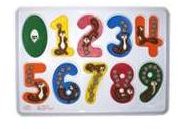
1. Whenever you are counting things or practicing number recognition, change things up by doing it in Spanish.
Numbers 1-10: uno, dos,tres,cuatro (coo-wah-tro), cinco (sink-o) seis, siete (see-ay-tay), ocho, nueve (new-ay-vay), diez (dee-ace)
2. Activity with colors: Play “I Spy” with Spanish colors. “ I spy something rojo (row-hoe)”
Colors:
rojo (row-hoe) red
azul (ah-suel) blue
amarillo (ah- mah-ree-yo) yellow
verde (vair-day) green
morado (more-ah-doe) purple
blanco (blahn-co) white
negro (nay-grow) black
Game with colors: Place paper squares of colors (the ones that you have worked on in Spanish) on the floor in a circle. Have the children stand on a color. Have them move around the circle all in the same direction while music plays. When the music stops, each child should be on one color. Say the color in Spanish. If a child is standing on that color he has to sit in the center of the circle. The last one left standing wins.
Farm Animals in Spanish
Farm Theme Week:
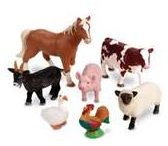
When you talk about farms and farm animals, incorporate Spanish!
el granjero (grow-narrow) farmer el ganso (gone-zo) goose
la vaca (vah-cah) cow el caballo (cob-bye-yo) horse
el gato (got-toe) cat el cerdo (sair-doe) pig
el pato (pot-toe) duck el perro (pair-row) dog
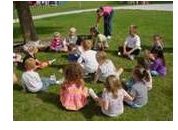
Play “Duck,duck, goose” but say “Pato,Pato,Ganso” The students will love it!
Hot or Cold
Hide something in the room while “it” is hiding his/her eyes. Then play the “Hot and Cold” game but use the words “Calor” (cah-lore) for hot and “Frio” (free-yo) for cold.
As the student get closer to the hidden item say “Calor, calor, calor…” and fan yourself like you are hot. When the student moves farther away from the hidden object say “Frio..frio..frio” and hug yourself like you are cold!
Add Spanish everyday!
These activities should be included every week. Count in Spanish. Say the colors. Play a game. Learn a few words that go along with the theme on which you are working. Challenge yourself to add new words and keep repeating the words students have already learned. This way students will have better retention and it will begin to be a natural component in your classroom. Children will have fun, parents will love it and you will be proud of yourself for adding a new educational feature to your classroom.


