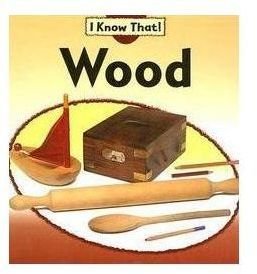
Who would have guessed that learning about wood would be such fun? Young students discover the properties of wood in this enjoyable lesson plan. You will find suggestions for new vocabulary, discovery centers and a homework printable.
It is never too early to teach students the importance of our natural resources. If they understand how valuable the resources are, they will hopefully grow up to be responsible citizens and take care of the Earth.
Objectives
- Students will discover the properties and uses of wood.
- Students will demonstrate an understanding of new vocabulary related to wood.
- Students will participate in hands-on discoveries to learn more about the properties of wood.
Materials
Book : Wood by Claire Llewellyn
Small samples of different kinds of wood (Check with a local lumber store, home improvement or builders)
- Small plastic tubs to hold water (2)
- Access to hot water
- Large mugs (2)
- Wooden spoons(2)
- Metal spoons(2)
- Wooden Craft sticks
- Charcoal pencils
- Piece of charcoal (optional)
- Glue
- White paper
Copies of We Learned About Wood Today Handout for Homework (optional)
Vocabulary
- Natural material – a useful item that can be found in the world around us
- Charcoal – material made from baking wood; can be used as fuel or in artwork
- Float – stays on the surface of water.
- Sink – drops below the surface
- Insulator – a material that keeps sound and heat from passing through it easily
- Fuel – material to produce heat or power
Procedure
Before the lesson, preview the book Wood and decide which sections fit the needs of your students. The first four sections, pages 6-17, are the best fit for the above objectives.
As you read to the students, allow for open conversation.
- Where do we find wood?
- Can you find something in the classroom that is made of wood? (Allow time to explore.)
- Why do builders use wood to build houses and furniture?
- Why do builders use wood to build boats?
- How can we make sure that we will always have wood?
- How can we use wood as a fuel?
Next divide your students into four small groups for discovery activities. If you have a larger class you can divide the students into more groups and have the same activity for more than one group. The first two activities will need closer supervision by you or a volunteer.
Activity 1
Provide mugs of hot water (Not boiling! Keep it safe!) Students place a wooden spoon and a metal spoon in the hot water for a few minutes. Then take them out. Touch them. What do you notice? The wood is not hot. It is an insulator. It does not allow heat or sound to pass through it very easily.
Activity 2
Provide a tub or two of water and small pieces of wood. Do all of the pieces float? Slowly add items on top of the piece of wood until it sinks. What makes the wood sink?
Activity 3
Provide paper and charcoal pencils. Charcoal is made from wood baked slowly. Students can draw with the charcoal and talk about how it is different from crayons or markers.
Activity 4
Provide wooden craft sticks and glue. Allow students to create something either individually or as a group.
Assessment - Journal writing:
Students should write two sentences telling what they learned about wood.
Homework:
Use the printable activity provided or ask parents to help their child list ten things in the house that are made of wood.
References
- Llewellyn, Claire. Wood. Franklin Watts, 2002. ISBN-13: 978-0531146330


