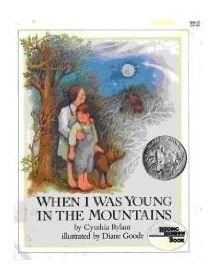
Looking for a great book to use when teaching your students how to make inferences? Try Cynthia Rylant’s book, “When I Was Young in the Mountains”. This lesson will improve your student’s reading comprehension by teaching them to read texts more thoughtfully.
Making inferences is a key component in reading comprehension. In this inferring lesson using When I Was Young in the Mountains by Cynthia Rylant, students will use what they already know along with new information and clues from the text to form new ideas.
Materials
When I Was Young in the Mountains by Cynthia Rylant
Chart paper and markers
Prior Knowledge
Students should be familiar with schema and making text connections, since part of inferring involves using what you already know to form new ideas. Teach this lesson after students are proficient in making text connections.
Procedure
Begin by asking the students to think of some things they can do to help them understand something they are reading better. Discuss comprehension strategies you may have already learned like using prior knowledge, making connections and asking questions. Then tell them that sometimes they will use these strategies as well as clues from the text and even the pictures to help them have a better understanding of the text. This is called inferring or making inferences.
Show the class the book When I Was Young in the Mountains by Cynthia Rylant. Read the title and author and talk about what they see on the cover and have the children predict what they think the book might be about. Read the first page about her grandfather comes home covered in black dust in the evenings. Say something like:
“Wow, I wonder I why her grandfather comes home so dusty and dirty. I bet he’s coming home from work, since it’s in the evening and I know that’s when a lot of people get off of work. I wonder what kind of job he has. Oh, it says that the black dust is from the coal mines and I see in the picture that he is wearing a hat that looks like it has a light on it. I bet he worked in the coal mines. I know that in the mountains where this story takes place there are a lot of mines.”
After you have modeled inferring, stop and briefly point out how you inferred what her grandfather’s job was using information you already knew and clues from the text. On a large piece of chart paper, make three columns and label them What I Inferred, Clues From the Text and My Prior Knowledge. Write down your inference, the text clues and your prior knowledge on the chart. Then continue reading, stopping two or three more times to make inferences and add them to the chart. Here are a few good places to stop and the inferences you might make:
She has to go to the johnny-house in the middle of the night. You might infer that she is sick because she ate too much okra.
AdvertisementThey had to pump water, carry home from the bottom of the hill, and heat it for baths. You might infer that they don’t have indoor plumbing or that it was a lot of work to take a bath, so they probably didn’t do it every night like we do.
A black snake came into the yard and Grandma would either scare it off or kill it. You might infer that Grandma was brave and didn’t scare easily.
Advertisement
Begin to let the class participate in making the inferences by asking them questions as you read.
- What is really happening?
- How is the character feeling?
- How do you know?
- What clues from the text or the pictures make you think that?
Assessment
After you have finished the book, give the children a copy of the Making Inferences Chart and have them make an inference based on the final page of the story. Look over the inferences that they made. Did they make sense? Could they back them up with information from the text and things they already knew? Don’t be discouraged if they don’t all get it right away. Making inferences can be a challenging strategy to teach children. Continue to read more books and model inferring and your class will soon be inferring with ease.
Resources
Into The Book: Inferring, reading.ecb.org/teacher/inferring/index.html


