When teaching your students about neuroscience, you will need to explain the different parts of the nervous system. This lesson plan covers the different parts: central and peripheral, and the divisions of each. This lesson plan also includes exercises.
When teaching students about the brain, introduce the nervous system. Explain that the brain communicates with the rest of the body
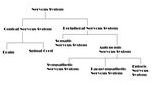
through nerves, which are divided into two main sections: the central nervous system and the peripheral nervous system. Because the different divisions of the nervous system can be confusing, using a flow chart can be helpful You’ll be able to use it as an exercise at the end of the lesson.
Begin the lesson by writing the three basic function of the nervous system as described on the website from Maricopa Community Colleges:
“Receive sensory input from internal and external environments”
Advertisement“Integrate the input”
“Respond to stimuli”
Advertisement
When going over each of the nervous system divisions, ask the students how these three basic functions are involved.
Central Nervous System
Explain to students that the central nervous system includes the brain and the spinal cord. Point out to students that the brain is made up of
about 100 billion nerve cells, according to the University of Washington. You can review the lesson on neurons , and how they send signals. Make sure they understand the concept, as it will be important for the rest of the nervous system lesson.
Once the brain has been reviewed, move on to the spinal cord. Explain to students that the spinal cord is the second part of the central nervous system, and is the connection of the brain to the peripheral nervous system. Using a visual image, either a model or a labeled diagram, show the students the 31 segments of the spinal cord: eight cervical, 12 thoracic, five lumbar, five sacral and one coccygeal segments.
Somatic Nervous System
After covering the central nervous system, move to the peripheral nervous system. Explain to students that the peripheral nervous system covers all of the nerves outside of the brain and spinal cord. Since the peripheral nervous system has two main divisions — the somatic nervous system and the autonomic nervous system — break up the peripheral nervous system lesson into these two groups.
Explain to students that in the somatic nervous system, there are two types of nerve pathways: afferent pathways and efferent pathways. Point out to students that the names of the pathways indicate their direction. With an afferent pathway, the nerves send the sensory information to the central nervous system. With an efferent pathway, the nerves send motor signals to the muscles. As an exercise, have the students draw diagrams of each pathway.
Autonomic Nervous System
Point out to students that the second part of the peripheral nervous system, the autonomic nervous system, controls the internal organs and is further divided into three parts. To explain the sympathetic and parasympathetic nervous systems, get the students involved. First, announce that there will a quiz at the end of the lesson.
Once the students look visibly upset, tell them there is no quiz. Explain to them that they just used their sympathetic nervous system and parasympathetic nervous system (you may need to apologize for scaring them!). Point out that the sympathetic nervous system is responsible for the fight-or-flight response, which is the body’s response to stress, while the parasympathetic nervous system causes the relaxation response when the stress is gone.
Note that the third part of the autonomic nervous system, the enteric nervous system, is the nerve fibers that innervate different organs, like the gall bladder, gastrointestinal tract and pancreas.
References
- Maricopa Community College: The Nervous System
- Image Credit: Divisions of the Nervous System by Elizabeth Stannard Gromisch. All rights reserved.
- University of Washington: Divisions of the Nervous System ,
- MedlinePlus Medical Encyclopedia: Central Nervous System and Peripheral Nervous System