The following activities will demonstrate how easy it is to create STEM (Science, Technology, Engineering and Math) lessons from a novel, and sure to reel the students back into the classroom.
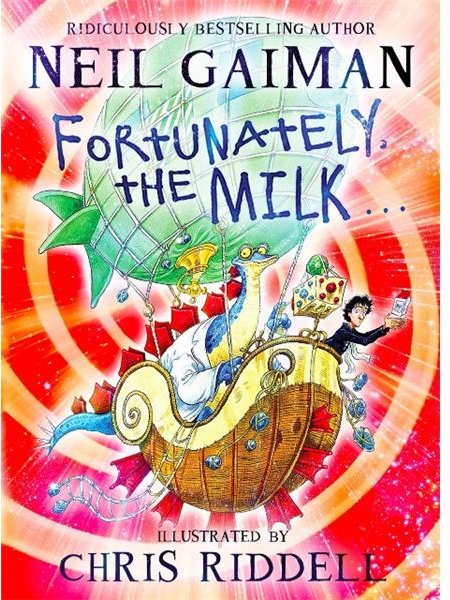
Neil Gaiman of Coraline fame has written another highly energetic and delightful book for young adults. This short novel would be great for the end of the school year, when students’ attention begins to wane. The science and math activities can be completed concurrently with the reading; all other activities are post-reading.
Age Level
Appropriate for grades 6 through 8. ESL students should work with partners and/or keep a double-entry journal.
Objectives
- Design and follow simple plans using systematic observations to explore questions and predictions.
- Formulate explanations from evidence.
- Use basic science terms and topic-related science vocabulary.
- Compare and contrast stories in the same genre (e.g., mysteries and adventure stories) on their approaches to similar themes and topics.
- Follow precisely a multistep procedure when carrying out experiments, taking measurements or performing technical tasks.
- Illustrate and communicate original ideas and stories using digital tools and media-rich resources.
- Solve a science-based design challenge and build a prototype using science and math principles throughout the design process.
- Create a timeline to show intervals of time.
- Graph points on a coordinate plane.
- Demonstrate command of the conventions of standard English capitalization, punctuation and spelling when writing. (While the conventions of using hyphenated adjectives is a high school standard, this lesson can easily be taught in middle-school.)
Pre-Reading Activity
A few days before reading, discuss various genres focusing on fantasy. Have students make a list of as many fantasy stories they can muster in cooperative groups and then compare lists as a class. Afterward, have other novels on hand that Neil Gaiman has written to discuss with the class.
Part A. Science Lesson
Materials
- The novel, Fortunately, the Milk by Neil Gaiman
- Beakers
- Various kinds of milk
- Observation log
- Experiment worksheet
1. Using various kinds of milks, such as soy, whole, 1%, 2%, almond, goat and coconut, fill each beaker with a half cup of milk.
2. Label beakers with the specific kind of milk and the date.
3. Instruct students to complete the Observation Log, listing the types of milk and the date. Photocopy sheets back-to-back to save paper.
4. Complete the top portion of the Science Experiment worksheet.
5. Each day students will note the changes in the various milks on the Observation Log.
6. Observe for one week, logging information on the Observation Log.
7. Ask students to write their conclusion on the Science Experiment worksheet .
This post is part of the series: Fortunately, the Milk by Neil Gaiman STEM Activites
Lessons for STEM (Science, Technology, Engineering, and Math) activities from the novel “Fortunately, the Milk” by Neil Gaiman. The Science and Math activities can be completed concurrently with the reading; all other activities are post-reading.