Need to teach your students how to find the mass of an object using a triple beam balance? This guide will give you a clear and concise teaching approach to present to the student, allowing you to not only teach them about the device’s function, but how to use it as well.
Finding the Mass of an Object
First and foremost, it’s important for students to know that mass is measured in milligrams, grams, kilograms, pounds, or tons. The most common way to calculate mass is by using a scale. One of the best ways to measure the mass of an object is to use a triple beam balance.
In balancing a scale with weights, the triple beam balance will show students how to find the mass of an object. It’s relatively easy to use, making it the most common instrument used for measuring mass in a school classroom. If kids have not come into contact with it at this point of their curriculum they are almost guaranteed to see it sometime soon in the future, so it would be a tremendous benefit for them to take the initiative now to learn how to use the triple beam balance to find the mass of an object.
What Should Students Know?
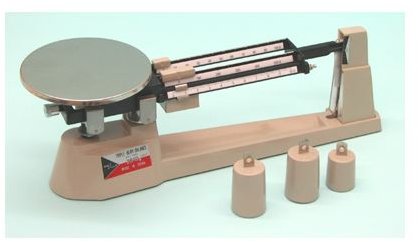
The triple beam balance derives its name by the three beams that enable the device to move masses along the beam. A typical triple beam balance consists of a counter weight, pan, beams, weights, balance pointer, base, and auxiliary weights. The three beams consist of varied weights, measuring from the highest having 100-gram graduations, the middle having 10-gram graduations, and the lowest having 1-gram graduations with .10-gram graduations in between. Because the lowest weight beam measures in 1-gram graduations with .10-gram graduations in between, we know that the object can be estimated to .01 to .02 g.
These instruments are known to be tough and inexpensive to purchase, making them an attractive first choice for finding the mass of an object. A triple beam balance is unaffected by gravity, for the simple reason that it compares a known mass to an unknown mass. There are several instruments that can be used to measure weight, but to get a true measurement of mass the perfect instrument of choice is the triple beam balance.
Teaching Students How to Use It
To begin measuring mass the balance needs to be set at zero. All the weights have to be moved to the left side of the beam and the pointer needs to be straight. If the pointer is not straight, students should adjust it using the counter weight. Now they might be thinking: “Okay, the scale is balanced. I’m ready to know how to find the mass of an object. What’s next?”
Now that the scale is balanced they can put their object on the pan to begin measuring its mass. After setting it down, tell them to wait a moment for the balance to settle. Next they should start by moving the heaviest beam to see if the object needs that much weight to balance out or if more is going to be required. Let’s say that the object needs a little more weight to level out. Their next move should be to move the next beam and continue moving beams until they find the right weight to balance out the scale. Once this has been done, all that’s left to do is add the numbers between the three beams. The number they calculate is the mass of the object.
Resources
EdInformatics.com: https://www.edinformatics.com/math _science/mass.htm
Triple Beam Balance: https://www.physics.smu.edu/~scalise/apparatus/triplebeam/
Triple Beam Balance: https://genchem.rutgers.edu/balance3b.html