Use those few extra minutes of math class to explore estimation and volume.
Objective
Students will use their sensory and estimation skills to predict and find volume of objects.
Materials
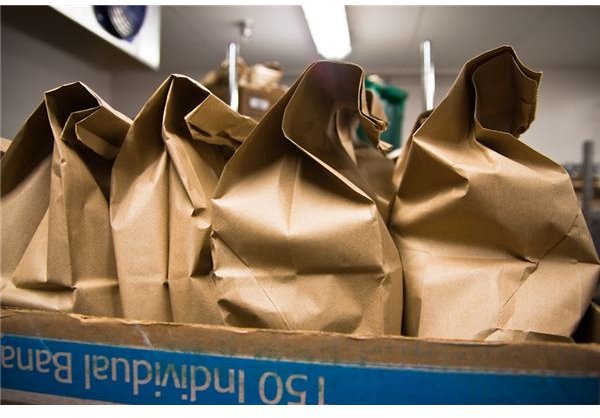
- Brown lunch bags
- Variety of objects in recognizable shapes such as rectangular prisms, cubes, cylinders, spheres, triangular prisms (boxes, balls and cans work well)
- Paper slips
- Pencils
- Measurement tools such as rulers and measuring tape
Lesson Procedure
Note: once you have initially introduced students to this activity, you can use it at any chosen time to follow the same basic procedure with different objects.
Students should have some experience with identifying three-dimensional shapes and finding volume of those shapes to be comfortable participating in this exercise.
Step One: Teacher will introduce a “grab bag” object hidden in a brown paper bag and allow students to feel the object without looking at it. Students will write down their estimates of the shape of the object, dimensions and volume on slips of paper. Students will put their names on the slips and pass them in for teacher to collect.
Time-Saving Tip: depending on the size of the class, have multiple brown bags with the same object to pass around so it does not take as long for students to get a chance to feel the object and write down their estimates.
Step Two: Teacher will designate a student volunteer to record the students estimates on a sheet of paper during the rest of the activity (teacher should remember to pick different students each time this activity is completed in order to be sure everyone gets equal participation time throughout the school year).
As student is recording estimates, teacher will reveal the object to the class. Student volunteers will assist in measuring the dimensions of the object. As a class, students will identify the procedure for finding volume of the object. Teacher will give students time to compute the volume using the correct formula. Students will share and discuss their answers.
Step Three: Student recorder will reveal the estimates given by students, noting the five closest estimates. Teacher may want to offer a reward for the top five estimates with an additional reward for the student who got the closest estimate.
Suggestions and Modifications
Special needs students: allow students to see the object as they estimate dimensions and offer assistance as they compute the volume with the class.
Lower grade level students: This activity can be done using flat (two-dimensional) shapes, asking students to find the area rather than the volume of the shapes.
Reward idea: Teacher can use items desirable to students (energy bars, balls, snacks or drinks, pencils, etc.) and allow the students with the closest estimates to keep the items as rewards.
Assessment
Teacher should monitor frustration/success level of students and note accuracy of estimates/computation as they participate in this activity to gage their general skill levels.
Extension
Allow students to contribute items for the activity that they have pre-measured at home to see if they recognize their items in the grab bag.
References
- Image Source: flickr.com/photos/stevendepolo