Using a simple tool to identify a composition, students can create their own unique paintings from any view they see outside!
Objective: Students will use a viewfinder to identify and create plein air painting scenes.
Materials: Pre-cut mats (to save time) or cardboard, scissors, rulers, and clips to create viewfinders, art boards, paper, chalk or oil pastels, sample paintings of plein air work, pastel or drawing paper, hats, and sunscreen
You can easily make your own viewfinders. Follow these directions: https://painting.about.com/od/composition/ss/MakeViewFinder.htm
Lesson Procedure:
Step One: Teacher will introduce students to examples of plein air painting. A few classic landscape pieces might include works such as:
Pathway at Chou in March by Camille Pissaro
Riverbanks (Bords d’une riveire) by Paul Cezanne
Haystacks (Effect of Snow and Sun) by Claude Monet
Teacher should discuss characteristics of plein air such as effect of light on objects, use of color and value, and how artists might have chosen their compositions. Students should note the compositional elements of the sample paintings and discuss how they think artists working outside might choose what to include in a painting.
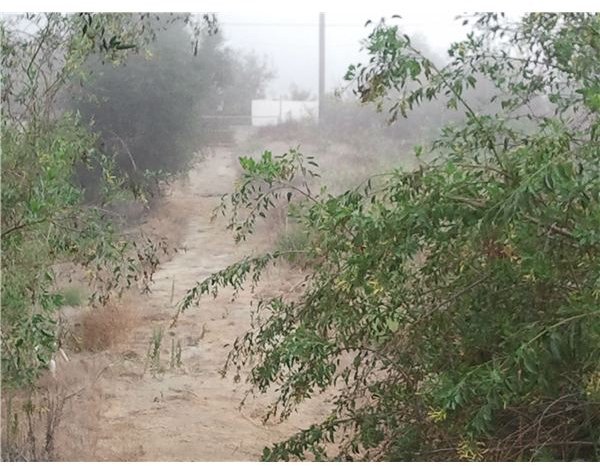
Step Two: Teacher will show students a photo of an outdoor scene (preferably done on a projector to simulate being outdoors). Using a pre-cut mat, teacher will hold the mat up to the scene and identify elements of a strong composition. Such elements might include a landmark object (such as a large tree or body of water), a clear foreground, middle ground, and background, and emphasis on sky or land (using two parts sky and one part land, or one part sky and two parts land), or a scene with a path or fencing winding in and out of the composition.
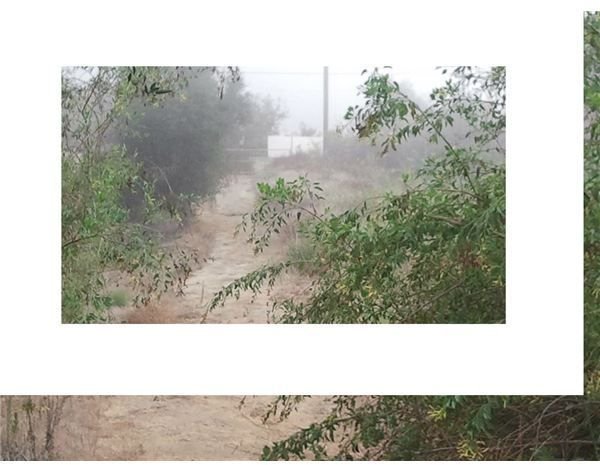
Tip: for beginners, it is best to stick to simple landscapes and avoid items that require a more linear perspective (such as buildings).
Step Three: Teacher will sketch a composition using the viewfinder for guidance as students sketch along at their desks. Students who feel comfortable with their sketches may want to block in basic values (lights and darks) for practice.
Step Four: After students understand the concept of using the viewfinder, they will take their materials outside and set up for a short painting session. Teacher will guide students in choosing a view to paint using the following guidelines:
 Advertisement
Look for clear lights and shadows. Late morning, midday, and early afternoon are good times to work from outside light (it changes more rapidly in the early morning and late afternoon).
Make sure students are not facing directly into the sun.
AdvertisementFor the first lesson, keep it simple. A view of a tree against a simple background is fine for a beginning piece.
Students do not have to hold their viewfinders up while sketching and painting; rather, they should use them as a tool to remind them of composition as they work.
Advertisement
Step Five: Allow students 30 minutes or so to complete a sketch and block in lights, darks, and color with pastels. Bring students back inside and briefly have them share their experiences (good or bad) with the painting session.
Assessment: Ask students to write a brief evaluation of using a viewfinder as a tool, including whether or not they found it helpful when sketching and painting outside.
Extension: If possible, give students a few more practice sessions, and extend the activity by taking students on a plein air field trip to a park or other scenic location. Give students ample time (at least two hours) to complete larger plein air works on the field trip, and collect and display the works in a “Plein Air Show” upon their return.