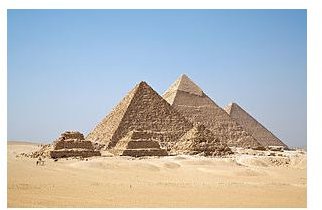
You can’t take your social studies students to Egypt to see the Pyramids or the Valley of the Kings, and there’s no way you can possibly show them Egypt as it was during the days of the pharaohs; but this webquest on Ancient Egypt will bring them close to the monuments and culture of the time.
An Ancient Egypt Webquest
The Egypt webquest below enables you to take your students on a journey through the Egypt known to the Ancient Egyptians while it gives
them experience locating and using Internet content.
A webquest is an exceptional teaching tool. It lets students discover new material on their own, or in this case, allows your students to enhance knowledge they have gained from previous lessons on Ancient Egypt .
(Use this handout of the assignments in this webquest complete with grading rubrics.)
Part I: Questions and Answers
Use the website below to answer these questions about Ancient Egypt. Answers are provided here but are not on the handout in the media gallery.
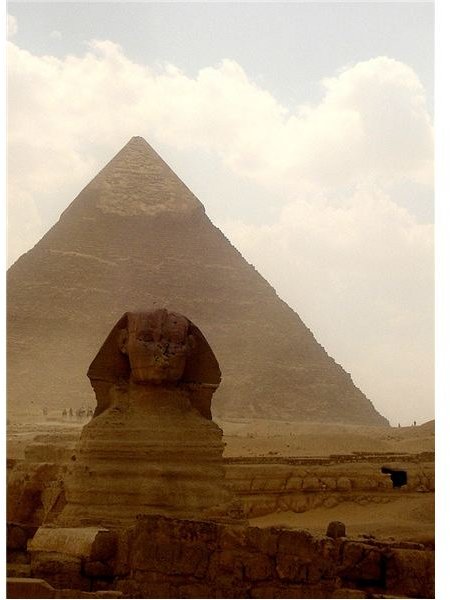
Explore the Pyramids at National Geographic.com
1. What did the Ancient Egyptians believe happened to the Pharaoh upon his death?
They thought he became Osiris, king of the dead.
2. Why was it thought to be essential to mummify pharaohs?
Since the ka, (the spiritual energy of a person’s soul or essence), stayed with the pharaoh’s body, it was essential to keep the body in good form so the pharaoh could fulfill his duities as king of the dead.
3. Define mastabas and benben.
Mastaba-flat, mud-brick or stone tombs. The word means bench in Arabic.
Benben- pointed stone symbolizing the sun’s rays.
4. What new structures were built during the Old Kingdom?
Pyramids
5. What was the main purpose of these structures/monuments?
Pyramids served as tombs for the pharaohs.
6. Which Pharaoh built the first pyramid?
Djoser
7. Who was his architect?
Imhotep
8. Was it a true pyramid?
No. It was a step pyramid consisting of a series of stacked mastabas.
9. Which Pharaoh built the first true pyramid and what was it called?
Snefru ‘s third attempt at a pyramid, the Red Pyramid, was a true pyramid shape.
10. Were slaves responsible for pyramid construction?
No.
Part II: Build a Pyramid
Use the Pyramid Index at National Geographic.com, the Pyramids and Temples of Egypt , and Who Built the Pyramids? for the following:
- Choose a pyramid you would have liked to work on. Pretend you are part a work gang building this pyramid for your pharaoh.
- Name your work gang and explain the significance of its name.
- Why did you choose this pyramid? Explain your answer with details about the pyramid, the time within it was built, and the pharaoh it was built for.
Part III: Gods and Goddesses
Visit the BBC’s Ancient Egyptian God’s Gallery and read the description of each deity in the gallery.
Go to the Gods and Goddesses of Ancient Egypt and explore the catalogue of gods, read the creation story, and take the challenge.
- Choose a god or goddess and compose a prayer. Your entreaty must be suitable to your chosen deity’s purpose and function. See the rubric .
This post is part of the series: Ancient Egypt Lesson Plans
Introduce your students to the land of the Pharaohs, mummies, and pyramids.