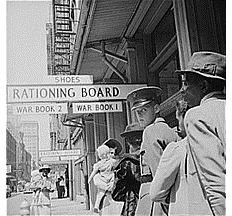
While the soldiers were fighting courageously overseas, US citizens dealt with food rationing among other things on the home front. Students will learn what foods were rationed, and will plan a week-long menu just as World War II housewives would have planned their meals using rationing points
Introducing the Concept of Rationing to Kids
Kids today have no concept of food rationing. The United States has been a land of plenty ever since this country’s children can remember.
The very concept of governmental rationing will probably be very interesting and foreign to kids. But children in the 1940s had to deal with food rationing during World War II.
Food rationing started in the spring of 1942, when the government realized that something must be done to control the supply and demand of certain foods. Food had to be shipped to the troops fighting overseas, and this left a shortage in the United States. Rationing would ensure that wealthy families couldn’t just buy large quantities of foods that were in short supply at a higher price. This meant that every family, rich or poor, here on the home front would be affected by food rationing. Food rationing came to an end in 1946.
Foods Rationed on the Home Front
Some of the food items that were rationed during World War II were butter, sugar, meat, canned fruits and vegetables, cooking oil, tea, coffee, dried beans, ketchup, and baby food.
During that time the government used a point system to determine how much of each item a family could purchase. The number of food coupons your family would receive each month depended on how many people were in your family. Each family received both red and blue stamps with a certain number of points on them.
Red points were for meat, butter, cheese, sugar and oils.
Blue points were for canned foods.
You had to have enough points for each food as well as the money required to purchase a rationed food. Families could exchange fat that was saved when frying bacon for red points that could be used to purchase more meat.
Fresh fruits and vegetables were not rationed but some were in short supply. This prompted the government to launch a victory garden campaign. Victory gardens were grown all over the country by families that may not have gardened before. The fruits and vegetables helped families have plenty of food during the war.
Planning WW II Rationing Menu
Students will plan a week-long menu using foods that were rationed in World War II.
This activity is probably best for grades 5 and up, but could be made simpler for lower grades by planning a day’s menu with less rationing points.
Give students a certain number of red and blue stamps that will last a week as well as money needed to purchase the needed foods in order for a family of four to eat for a week. Students will plan breakfast, lunch and dinner for a seven day period. Meals should be nutritious. You may wish to post a food group chart from the 40s or just use the food guide pyramid to help kids plan healthy meals.
Any unrationed foods can freely be added to the menu, such as fresh fruits or vegetables that are homegrown in a victory garden.
Each person during the war received 16 red stamps and 48 blue stamps each week. This would be 64 red stamps and 192 blue stamps for a family of four. You could use these numbers for students to plan their meals.
Make a chart of rationed foods and the number of points needed to buy them, and put the chart on display for kids to use while planning their menu. The students will list the point value by the food listed on the menu, and tally them up for each day as well as the week. Use this World War II food rationing chart with each page showing the points per rationed food item. This makes for lessons in both math and history.
Resources
1. American Historical Society
2. America in WWII: Enough to Go Around , by Carl Zebrowski
3. US History.com: World War II Rationing