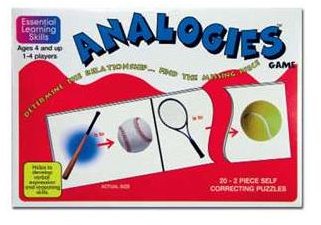
Teacher:Student :: Instructor:Learner. This is an analogy! Are you ready to learn tips to include analogies in your daily lessons for young students? Building higher level thinking ability in your students is fun and beneficial. Learn about different first grade activities with analogies.
Don’t let the big fancy word “analogy” scare you away. You can easily incorporate first grade activities with analogies into your daily lessons. By doing so, you will painlessly enhance students higher level thinking skills. People using analytical thinking see interrelationships between things. They examine all of the information before deciding on an answer. Prior knowledge is also used to reach the final conclusion.
What Is an Analogy?
A simple definition for the word analogy is “word relationship.” The reader studies how one word relates to another. Then they look at a third word and think of a word that relates to it in the same way. To make it less confusing, let’s look at a simple example:
polar:bear :: robin:____
Polar is a kind of bear. That is the relationship between the two words. Now look at the word robin. Following the same relationship pattern you would ask, “Robin is a kind of _____? Bird is the answer. So the analogy would look like this, polar:bear :: robin:bird .
You would read it like this, “Polar is to bear as robin is to bird.”
Why Use Them With Children?
Adding activities that include higher order thinking skills is wonderful for young children. Most are already curious and excited about learning. When you incorporate a few analogies that fit in with your current theme or lesson, enhancing thinking skills will become natural. It also gives you an opportunity to find children who have thinking skills beyond the average in your classroom. For those children, you may offer opportunities for enrichment in certain areas.
How Do I Add Analogies to a Lesson?
1. One fun way to do it is to have an analogy on the board when the students first come in every morning. Make it a game and tell them to keep the answer a secret if they know it. When you gather for Morning Circle Time, discuss the analogy and how to work out the answer.
2. Analogies can be added to most any subject. When you are doing your weekly plans, look at what is being presented in each subject. On a separate paper jot down some analogies that go with a few of the lessons. Here are examples:
Science- Animal Theme
fur:bear ::leaf:_____ (tree)
cow:farm::lion:_______(jungle or zoo)
Community Helpers-Worker & Tool-Worker & Building
driver:bus::pilot:_______(plane)
Mayor:City Hall:: librarian:________(library)
trash: trash collector::fire:___________(fireman)
pen:writer::hammer:________ (construction worker or builder)
Language Arts
Opposites or Antonyms
hot:cold::up:_____(down)
Synonyms
large:big::little:_____(small or tiny)
Math
Big Circle:Little Circle::Big Square :_________(Little square) You can use drawings instead of words.
1:2::5:_______( This could be 6 if students are thinking it is one more. Or it could be 10 if students are doubling the number.)
Reading and Spelling
cat:cats::dog:______(dogs)
fox:foxes::box:______(boxes)
child:children::person :_______(people)
First grade activities with analogies can be fun and challenging for your little ones. Analogies are easy to add right along with your regular lesson. If you identify a student with above average higher order thinking skills , you will be able to provide enrichment.
Resources:
https://mrsdell.org/analogies/
https://officeport.com/edu/blooms.htm
Primary Education Thinking Skills Curriculum published by Pieces of Learning
Image Source Page: https://www.janellepublications.com/7033.shtml Classroom puzzle about analogies
This post is part of the series: Higher Order Thinking Skills for Young Children
Benjamin Bloom’s taxonomy classifies levels of thinking. Most students are only evaluated on the lower level, which is knowledge or recall of information. Why not challenge students, while they are young, to strive for understanding, application, analysis and beyond?


