This article is a follow up to my previous articles about Kanji. It provides a fun and easy to method to quickly remember the Japanese Kanji.
Use Your Imagination
Learning the Japanese Kanji doesn’t have to be complicated, actually, it can be quite fun. This is the next in a series of articles exploring innovative and interesting ways to learn Kanji. This series of articles is meant to let you learn and understand the Japanese Kanji simply and easily.
In this article, I will once again use simple pictures that more or less look similar to the targeted Kanji. This is a method prized by many beginners as it doesn’t require any knowledge of Japanese.
Without further ado, let’s dig right in!
Pictures for Kanjis
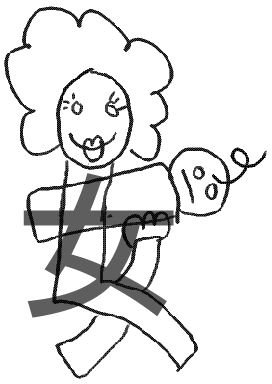
The first Kanji we’ll try to memorize today is this one: 女. This 女 Kanji represents “woman” or “female” just like the following word: 女の子 which means “a young girl”. Remembering this Kanji doesn’t require too much imagination fortunately as the actual Kanji looks very similar to its meaning. Simply imagine a woman, sitting and cradling her baby. This might be a little complicated to picture right away which is why I have made a quick sketch to better explain what I mean.
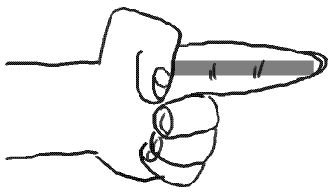
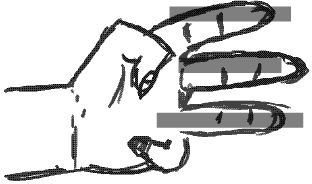
Next, allow me to introduce three, easy Kanji. The Kanji for one, two and three (一、二、三) are very easy to remember; all you need is to visualize a hand and outstretched fingers.
Allow me to demonstrate with three quick sketches:
One (一):
Two (二):
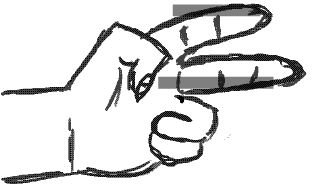
Three (三):
Let’s move on with something just about as easy; the Kanji for tree (木). The picture for this Kanji pretty much goes without any explanations; a single tree with its branches sticking out. Still, I thought it would be a good idea to provide another sketch to better illustrate my point.
Tree (木):
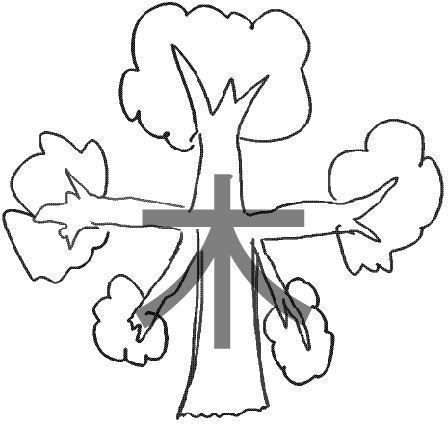
This Kanji, 木, can be used on its own, meaning “tree” or “wood”, depending on the context. It can also be used as a primitive element however (for more information about primitive elements check out my previous articles).
Interestingly enough, combining numerous 木 in a single Kanji ends up giving a very logical meaning. “林” means “a grove, or a small forest", which is logical as the more trees there are, the bigger the forest. In a similar way, “森” means an even bigger forest.
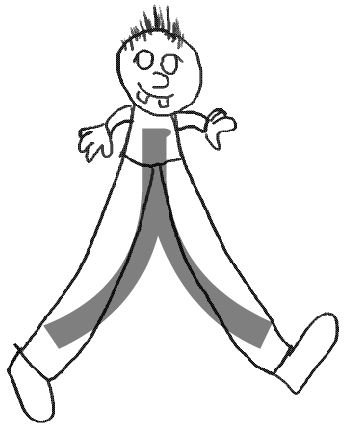
I would like to conclude this article with the Kanji for person, 人。Simply see this character as a person walking around with some very long legs. Just to make sure, here’s my last sketch for today:
A Helpful Bonus
I have regrouped the images in this article in one picture (available for download here ).
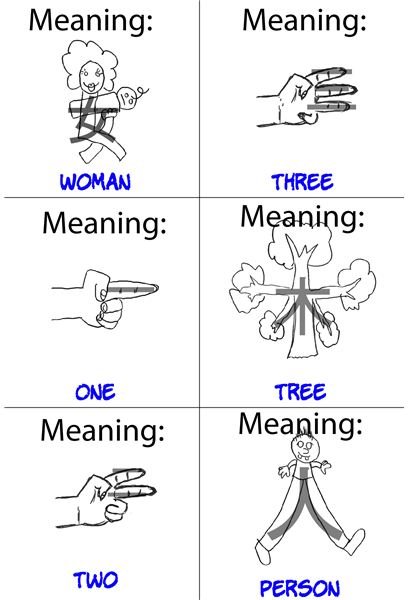
As a little bonus, I have also prepared some extra flashcards for you to download (available for download here ).
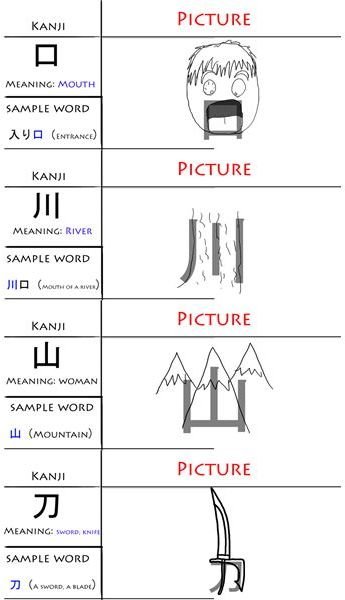
In case you’re interested in checking out my other flashcards, they are available here .
This post is part of the series: Learning the Japanese Kanji
This series of articles provide different approaches to learning the Japanese Kanji. Those approaches provide fun and practical tips to easily learn and remember the Japanese Kanji. Also included are articles explaining the different readings of the Kanji and other useful information.