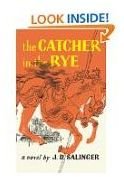
Use these essay questions for The Catcher in the Rye to help prepare for your next class discussion or test.
Holden Caulfield
Essay Questions for The Catcher in the Rye: In what ways does Holden not understand his own feelings?
Topic Sentence: In The Catcher in the Rye, Salinger does an expert job of showing how Holden observes things, yet fails to understand them.
Evidence #1: As Holden narrates his experience in the night club at the Edmont Hotel, he attempts to present himself as suave and sophisticated.
Analysis: The mocking behavior of the three women whom he attempts to impress, however, indicate that Holden looks like a jackass.
Analysis: Add in the fact that the waiter refuses to serve him alcohol, despite Holden’s insistence that he looks older than he is, shows he fails to understand the significance of the events in his life.
Evidence #2: Holden cannot make sense of his depression and frequent crying.
Analysis: The reader understands that Holden is experiencing a mental breakdown and engaging in self-destructive behavior.
Analysis: Holden fails to recognize that he is the cause of his isolation and suffering, that he brings torment with him wherever he goes.
Conclusion: The reader, unlike Holden, recognizes a contrast between Holden’s ideals and Holden’s actions, making him just as “phony” as the “phonies” he criticizes.
Questions for Discussion
Essay Question for The Catcher in the Rye: What does “the catcher in the rye” symbolize?
Topic Sentence: The novel’s most important symbol is found in the title.
Evidence: Holden explains to Phoebe that all he wants to be is the catcher in the rye. He pictures himself wearing a giant mitt, ready to catch kids as they fall off a cliff while playing in the rye.
Analysis: The kids represent childhood. The field represents innocence. The fall from the cliff represents the fall from innocence.
Analysis: Holden represents the attempt to shelter kids from growing up, and more personally, represents his desire to avoid the harshness of adult life.
Transition: The symbol is ironic.
Evidence: Holden mistakes the words in the song. He thinks the words are “if a body catch a body comin’ through the rye.” The actual words are “if a body meet a body comin’ through the rye” and is a justification for casual sex.
Analysis: He mistakes the cause of his torment–it comes from himself, not from others.
Analysis: It is ironic, too, that Holden’s avoidance of adulthood and his resistance to the “phony” adult world is setting himself up for a fall, as pointed out by Mr. Antolini.
Conclusion: Wanting to be the catcher in the rye symbolizes Holden’s misunderstanding of the world.
Sample Test Questions
Make sure you know how to answers these questions. At least one of them is bound to be on any test.
Analyze humor in the novel. Provide examples.
Salinger uses the following literary devices to create humor:
- Situational Irony - Holden calls everybody in the novel a phony, yet he is the phoniest of them all. He also claims to be independent, yet goes to drastic means to find companionship.
- Dramatic Irony - When Holden meets Ernest Morrow’s mother on the train to New York, he tells her what a great guy her son is. Holden tells us, however, that her son is the biggest piece of crap he’s ever met. The entire novel is an example of dramatic irony. We understand what’s happening to Holden, but he doesn’t comprehend the significance of important events.
- Verbal Irony - Holden frequently tells Stradlater what a great guy he is, but he obviously doesn’t mean it.
- Hyperbole - There are about 8 million examples of hyperbole on every page. Here’s an example: “You can hit my father over the head with a chair and he won’t wake up, all you have to do to my mother is cough somewhere in SIberia and she’ll hear you” (158).
- Litotes (a negated understatement) - Maurice assaulted Holden the night before. Holden says, “I didn’t see old Maurice around anywhere. I didn’t break my neck looking for him, naturally…” (106).
- Humorous Situations - The entire scene with the prostitute coming up to Holden’s room and Holden just wanting to talk and Holden in the Lavender Room trying to bust a move on the three ladies from Seattle are two examples.
- Repetition - The repetition of phrases like “he really was,” “I’m not kidding, “all of a sudden,” “I really did,” “I’m a madman,” and “I don’t know why, but I was.”
References
- Salinger, J.D. The Catcher in the Rye. Boston: Litle, Brown and Company, 1951.
This post is part of the series: The Catcher in the Rye Study Guide
Nothing like the tale of a maladjusted teenager for entertainment.