The war in Vietnam sparked resistance on the parts of many Americans, particularly the young. Anti-war feelings began primarily on college campuses, but spread to other segments of society quickly.
Organizations such as Students for a Democratic Society and the Free Speech movement galvanized and focused students’ anger, taking advantage of their increased visibility on the television to make themselves seem even larger than they were. As the war ground on, a vocal, growing group of Democratic politicians began to advocate for peace in Vietnam.
The students and the politicians would separately push their views in Chicago in 1968 – the politicians at the Democratic National Convention, and the protestors in the streets and parks.
Objective: Students should be able to describe the protest movement and events surrounding the Democratic National Convention in Chicago.
Materials:
- Class copies of the Port Huron Statement and Mario Savio’s “Gears” speech
- Classroom computer with a projector, speakers, and an internet connection
Lesson Procedure
1. Have students read the introduction to the Port Huron Statement, which can be found here:
https://coursesa.matrix.msu.edu/~hst306/documents/huron.html
Ask your students to answer the following questions, either in writing or in discussion.
- What problems are identified in society?
- What kinds of values are in evidence?
2. Then have your students read Mario Savio’s “Gears” speech from 1964, which can be found here:
https://www.americanrhetoric.com/speeches/mariosaviosproulhallsitin.htm
Follow the same process as #1 above.
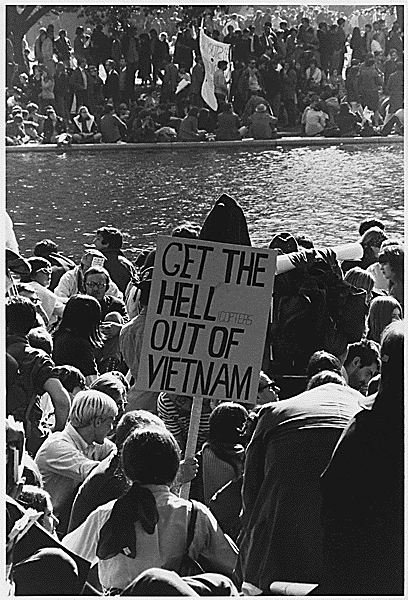
3. Discuss the fact that protests grew in size and visibility as the war dragged on. Protests became more visible and in some cases cross-pollinated with other protests over African-American and women’s rights.
4. A turning point for the war came in January and February of 1968 when the Tet Offensive proved that the American military was not in fact winning the war. Protestors and anti-war politicians alike stepped up their efforts.
5. The culminating moment for protest came at the Democratic National Convention in Chicago in August. PBS’s The American Experience has an episode on the convention which can be found here:
https://www.youtube.com/watch?v=1Iye1NQy1NY
Watch this with your students. At the conclusion, debrief on the significance of the events in Chicago in terms of politics, focusing upon the role of television in shaping public opinion.
References
This post is part of the series: The 1960s: Conflict, Rebellion and Change
In this collection of history lesson plans, we focus on the major personalities and events of the 1960s - including the Kennedy and Johnson administrations, the Vietnam War, and the Civil Rights Movement.