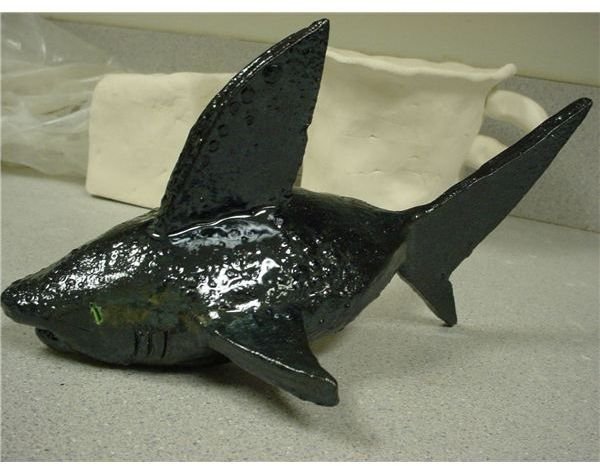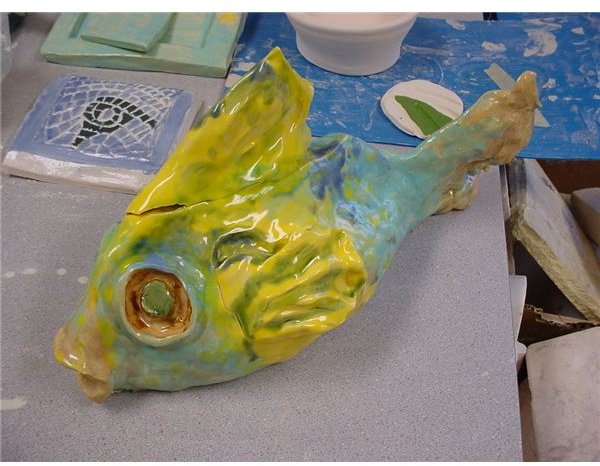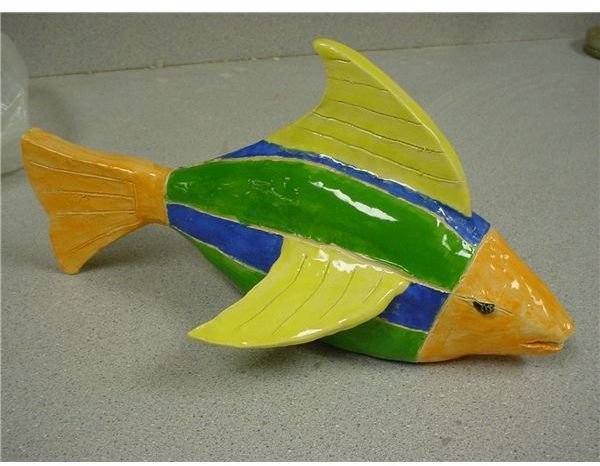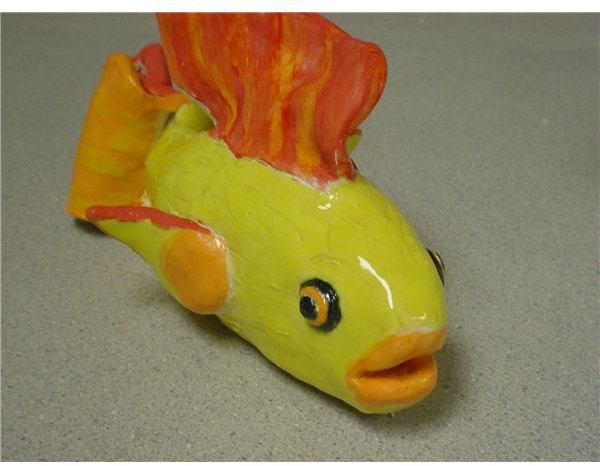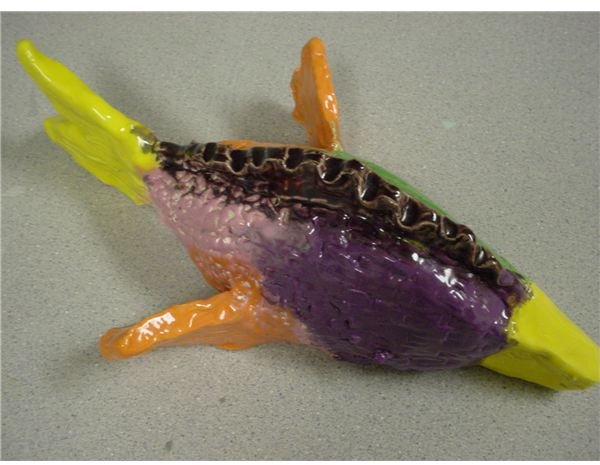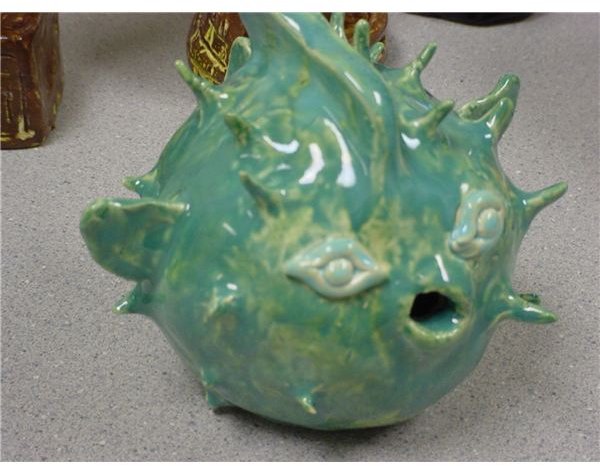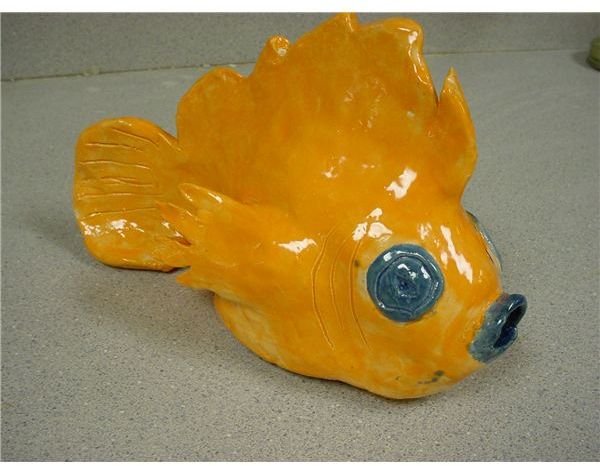
A fun lesson plan where students utilize prior knowledge of hand-building & glazing techniques in order to build a detailed 3-dimensional fish out of clay.
Flying Fish
Process:
Before this lesson, students should have knowledge of the three basic hand-building techniques: pinch pot, coil, and slab. They should also be aware of different glazing techniques and glaze vs. under-glaze. Students will be shown examples of ceramic fish by artists & craftsman prior to clay work.
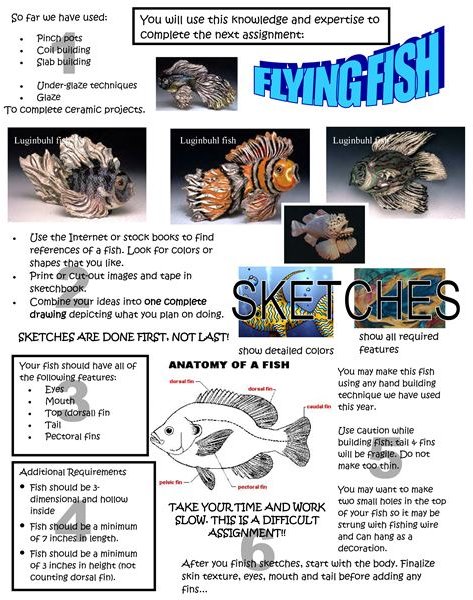
Students start by finding photo examples of fish from the Internet or stock photo books. They should print or cut-out images for ideas to tape in their sketchbooks. They will combine their ideas into one complete drawing depicting what they plan on doing showing detailed colors & all required features (see below). You may want to create a handout for students like the sample included in the images section below.
Requirements:
Create a 3-dimensional fish out of clay.
- Fish should be hollow inside.
- Fish should be a minimum of 7 inches in length.
- Fish should be a minimum of 3 inches in height (not counting dorsal fin).
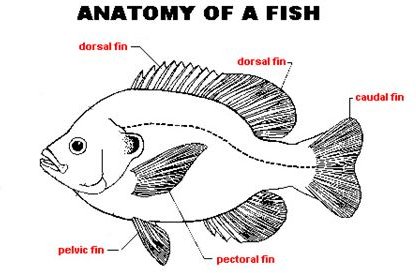
Fish should have all of the following features:
- Eyes
- Mouth
- Top (dorsal) fin
- Tail
- Pectoral fins
After students finish their final drawing, they should start construction starting with the body using any hand building technique previously learned. The technique will depend on the shape of their fish. Students may want to use newspaper to help shape their fish during the building process.
Students should use caution; the tail & fins will be fragile. They should take care to not make them too thin. It is a good idea to attach these pieces after they have finalized body texture, eyes, and mouth and may want to wait until their clay is leather hard. Students need to also decide how much texture to put into the clay or whether they will add texture or line/patterns with glaze.
Students may want to make two small holes in the top of their fish so it can be strung with fishing wire and hang as a decoration.
Vocabulary:
Leather Hard: The condition of a clay body that has dried somewhat but can still be carved or joined.
Slip: A mixture of clay and water; Works as glue to fuse two clay pieces together.
Score: Making small marks into the surface of the clay before adding slip or water to help fuse clay.
Pinch Pot: Creating a piece of pottery by pinching and molding a solid piece of clay with your fingers/hands.
Coil-building: Creating a piece of pottery by rolling a coil or “snake” out of clay, and molding a solid piece of pottery by layering and/or blending coils together.
Slab building: Building a form by joining sections that have been cut from sheets of damp clay.
Fine Art/Image Resources:
Fish sculptures: Betta Talk Raku
Ceramic Fish: Greg Luginbuhl
Aquatic Sculptures: Magic Mud
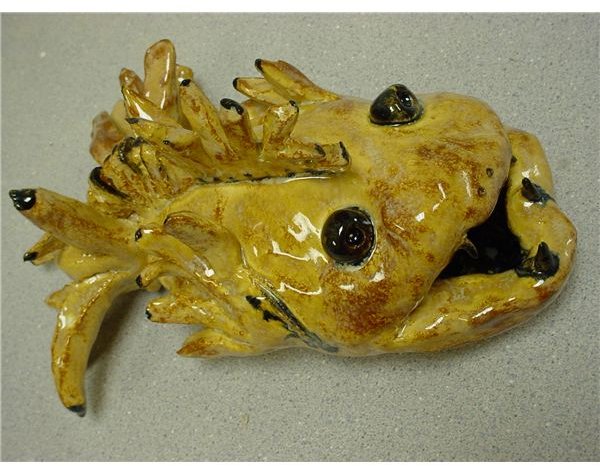
Student Work & Resources