As your ESL students are settling into their seats, grab their attention right away to help them begin thinking in English. Start with a joke, a music video, or a writing/dialogue prompt to get your students engaged at the start. This article has several great ideas.
Ha Ha Ha…Really?
Lighten the spirits of your students and yourself. Jokes, especially the cheesy ones, are great ways to get the day started. They are also a wonderful way to segue into the day’s topic and begin a conversation about language and word usage.
Take the following joke as an example,
Teacher: You missed school yesterday didn’t you?
Student: Not very much!
This joke would be a engaging way to start to a lesson about double meanings, teachers, or the meanings of the word “miss”.
Music Video

Find an appropriate music video to show in class and have it waiting when the students show up. Pass out the lyrics to students, and then play the video. Write questions about the music video and pose them to the students when the video is over. You could do an entire unit about world music, in which your students compare and contrast music from around the world while learning international vocabulary and culture. The students would really love to walk into class anticipating the next music video. If the sound and video were good enough, you would create buzz in the school about how cool the lessons are. This is a good way to engage your students from the moment the bell rings.
Writing Prompt
Have a writing prompt waiting for your students as they enter class. Make sure the directions are clear. Example,

Write 10 sentences about your experience with sports. What sports have you played, if any? Which sports are your favorites? Tell any funny, interesting, sad, or dramatic sports story that you have had.
This must be completed by 8:30. Be ready to share your answer with the class.
If you finish early, begin to read pages 33-35.
This kind of writing prompt answers nearly any question a student might have about what they should be doing when they come to class. You simply need to stand at the front of the class and point to the prompt as students come in. After a while of having the prompt ready, you won’t even have to point. Prompts can be used to teach grammer points including teaching ESL past, present, and future.
Dialogue Prompt
Having a dialogue prompt is very similar to a writing prompt. Example,
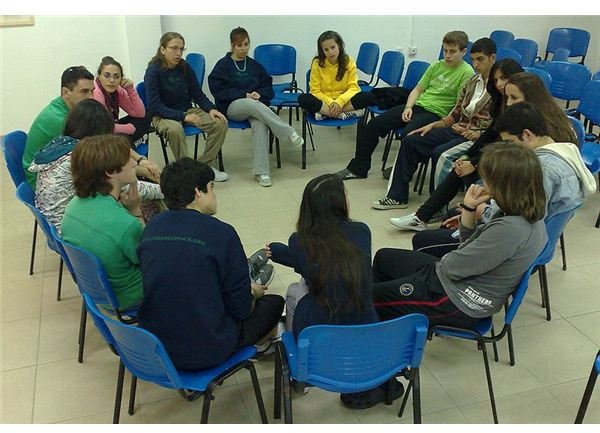
Turn to the person sitting next to you and discuss how to answer the following question, “What is the economy? What does a bad economy look like? What does a good economy look like? Be ready to share your partner’s thoughts with the class.”
Similarly to the writing prompt you should simply be able to stand at the front of the class and watch your students begin the appropriate work as they enter.
Follow these tips to get your students engaged and ready to learn from the moment they step foot inside your classroom.
References
- Image: Egyptian Musicians by under Ramsis1978 under Public Domain
- Image: Joke Alert by Ashibaka under CC BY-SA 3.0
- Image: Shlomi Dialogue by Seeds of Peace under CC BY-SA 2.0
- Image: Ball Point Pen by Ildar Sagdejev under CC BY-SA 3.0
- Teacher Jokes; http://www.jokesaboutteachers.net/teacher_jokes_one.html
This post is part of the series: ESL Lesson Plans
Find more complete ESL lesson plans here.